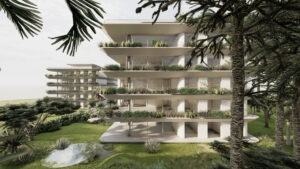
In recent years, particularly after the transformation that followed the 2020 pandemic, Punta del Este ceased to be seen as a summer destination and became a choice for permanent residence. Reflect with us on how Punta del Este’s identity inspires and promotes the characterization of businesses and brands.
Punta del Este and its essence
Punta del Este was initially a rustic fishing village working between the beauty and ferocity of the ocean. The first hotel was created by Pedro Risso in 1889 to receive travelers seeking medicinal sea baths. By 1907, it was officially named a beach resort city and began attracting traditional aristocratic families from Uruguay and Argentina who built chalets and designed residences.
The untamed natural charm of Maldonado and, particularly in Punta del Este, the distinguished topography upon which the city center was built on the peninsula have marked for decades the memory of generations that enjoy the services, outings, and of course, the calm and rough beaches.
Thus, Punta del Este’s positioning is also intimately linked to the development of city infrastructure: from Juan Bautista Gorlero’s vision—first mayor of Maldonado—to provide it with a definitive central physiognomy to, currently, the work of the municipality and private firms—from Donato Group and their vision for developing luxury residential experiences to foreign firms like the Brazilian group JHSF—that extend the city landscape in coexistence with beaches, forests, hills, and countryside.
Deep nature, city infrastructure, and capturing luxury segments are variables that Punta del Este has successfully integrated for over 100 years and together determine a recognizable identity.
This identity is what today unfolds and reinterprets itself in new zones and coastal corridors, focused on injecting nuances that connect with the aspirations of different niche segments.
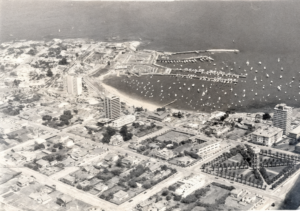
Punta del Este in the 1960s. Image: Aníbal Barrios Pintos Collection.
Slowdown in tourism and new inhabitants
That historical capital the city has gained by being chosen as a permanent vacation destination remains intact. In the present, in the tourism branch, and according to data from Uruguay’s Ministry of Tourism, 2026 indicators showed in the first quarter a slowdown of 13.6% in visitors compared to the same period in 2025. However, average spending per person increased by 9.5%.
According to reports from the Uruguayan Chamber of Tourism, the destination that captures the largest volume of tourists remains Maldonado department, with visitors from Argentina and Brazil as dominant nationalities.
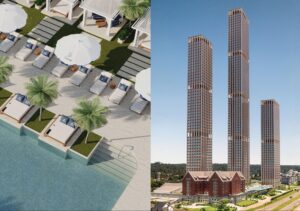
Cipriani Resort Residences & Casino, Punta del Este. Architecture by Rafael Viñoli Architects.
The slight slowdown in tourism in eastern Uruguay has not deterred developers and entrepreneurs from continuing to increase the supply of hospitality services, trusting in the value that the Punta del Este scene has historically meant for the country’s total tourism activity.
For its part, the establishment of new foreign residents in Uruguay maintains an upward trend: the country reported a record 16,870 residences in 2024, a 74% increase from 2023, with Maldonado as one of the main relocation destinations (National Institute of Statistics, INE, 2024).
The new premium resident
It would be reductionist to imagine the archetype of permanent resident as a veteran Argentine businessman who after a life dedicated to work now chooses to relax and enjoy a luxury lifestyle facing the sea.
Currently, Punta del Este and the “landmark” zones of Maldonado department (Punta Ballena and Laguna del Sauce to the west, Pueblo Edén to the north, Manantiales to the northeast, and José Ignacio to the east) register a broad spectrum of people from different nationalities who chose to stay and live.
While new Argentine residents remain the dominant migratory segment, since Javier Milei’s government (December 2023), a more moderate flow has been recorded as a result of fiscal changes in Argentina (Forbes Uruguay, 2025).
Additionally, new residents are arriving from other Latin American countries (Cuba, Brazil, Venezuela), with an emerging influx of North Americans, Brazilians, and Europeans: Russians, Germans, Spanish, and English (National Migration Office, 2024).
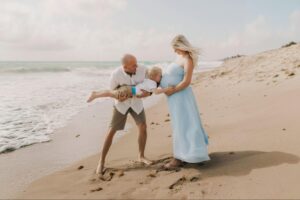
Beyond origin, the labor flexibility that the post-pandemic scenario left in many sectors and the reassessment of the meaning of life that COVID-19 forced to reflect upon, led to recognizing new demographic and psychographic characteristics, including the profile of a new premium resident: the segment of “executive entrepreneur“, which describes people from young to middle-aged (35 to 60 years) who move to Punta del Este, Manantiales, or José Ignacio with their families to work remotely, attracted by the safety and stability that Uruguay represents to them, and adding the relaxed lifestyle that these destinations offer.
Thus, Punta del Este and the area have been equipped with more outstanding schools, such as International College or The North Schools, with educational proposals as innovative as they are understanding of what these new residents expect for their children’s education.
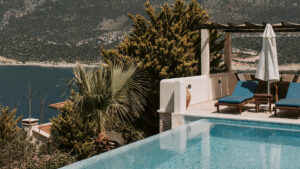
International College, Punta del Este.
Additionally, developments such as WTC Punta del Este Free Zone and another new Free Zone in the El Nido area, between Manantiales and José Ignacio, are examples of the interest shown by entrepreneurs and the municipality in transforming Punta del Este into a platform where an elite community can envision, drive, and operate international businesses.
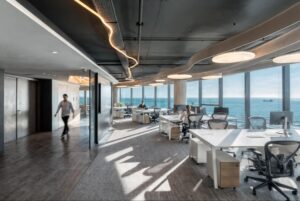
Vista Energy. WTC Punta del Este Free Zone.
Thus, the city begins to satisfy the needs of younger executives: life by the sea, safety, and legal and economic stability are now complemented by new and better places to work, an excellent level of international schools, and increasingly robust services.
Real Estate with success indicators
Directly connected to the migration wave on one hand and tourism activity on the other, the Real Estate sector in Uruguay moved over 2,700 M USD in 2025, a 10% increase from 2024. Additionally, according to official data from the National Institute of Statistics (INE), the first semester of 2026 already registers record levels of transaction activity.
To cite just one example, the coastal corridor connecting Punta del Este with José Ignacio is today one of the fastest-growing luxury real estate markets in South America, with oceanfront property values ranging from 3,000 USD to +10,000 USD per square meter.
In Punta del Este, real estate development extending beyond the peninsula’s limits not only illustrates a territorial expansion strategy for the luxury development market. It also describes a Punta del Este identity that promotes increasingly diversified lifestyle concepts.
The sub-identities of the Punta del Este corridor
The coastal corridor extending east from Punta del Este is not homogeneous and cannot be generalized. Each zone has built over time and organically its own identity that coexists with the others without visible overlapping.
In 2026, this diversity and richness is one of Maldonado department’s most singular assets as a platform for progress, lifestyle destination, and investment.
La Barra and Montoya
Since the 2000s, La Barra has been exalting its cultural and neo-rural dimension: art galleries, design spaces, and sophisticated gastronomic offerings distinguish it from the rest of the Punta del Este corridor.
With a bohemian, artsy, energetic framework and strong Río de la Plata coastal vibes, Real Estate and Hospitality Services projects in La Barra promote the slow life philosophy without abandoning spaces for leisure and fun. La Barra and its sphere of influence vibrate young, carefree, and adventurous.
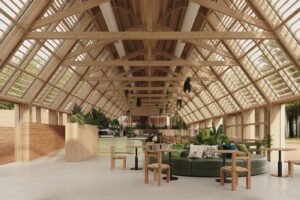
On the other hand, Montoya, an exclusive residential area and tourist reference point located in the La Barra zone, combines an ideal landscape for surf lovers with distinctive author-driven gastronomy, exalting its full richness at the namesake beach.
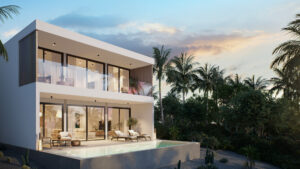
On the branding front, projects in La Barra often adopt a folk style, while others choose a stripped-down/minimalist aesthetic with urban traits. In the photo: Sonido Hotel, La Barra, with architecture by Tenue Riccheri + Riverti.
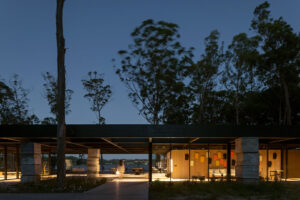
Reserva Montoya, Montoya. Arquitectura por MAPA. Paisajismo por Bulla.
With the promise “steps away from La Barra’s action”, projects rising in Montoya embrace the chic atmosphere of the area, reflecting a type of effortless elegance for those who choose to balance adventure with intimacy.
Manantiales
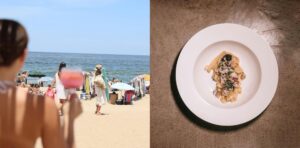
Located almost equidistant from Punta del Este and José Ignacio, Manantiales occupies a strategic point in the Punta del Este corridor. “20 minutes from La Barra’s action and 20 from José Ignacio’s tranquility” are recurring promises of developments in the area. Manantiales is synonymous with nexus, central position, and carries its own identity orbiting between calm and action.
With “Bikini Beach”, its main beach as its hallmark, Manantiales is each season a hotbed for the country’s most prominent social events—featuring personalities and fashion figures—inspiring sunset DJ Sets, and with waters ideal for surfing and bodyboarding.
However, it would be reductionist to anchor Manantiales only to events that happen at the beach during summer. The part that generates the most affection and attachment from its permanent residents is the majesty of its seaside estates, where the landscape transforms completely, inviting relaxation and disconnection.
Manantiales integrates the vibrant and the serene propelled by diverse topography where the ocean dialogues with vast stretches of sand, rocks, and to the north, wooded fields, green hills, and lagoons: Manantiales is the refuge for those who seek to disconnect without giving up having everything within reach.
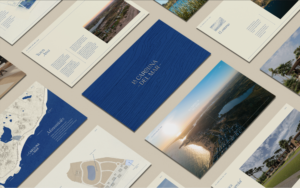
bajo el concepto quiet luxury. En las imágenes: La Carolina del Mar, desarrollado por Donato Group, con arquitectura de Obraprima y branding de nuestra mano en Estudio Nómade.
En Manantiales, domina la idea de desacelere y elegancia sin esfuerzo, con promesas de marca y un lenguaje visual volcados sobre proyectos cargados de personalidad que conviven con otros de rasgos empatados
José Ignacio
Unlike other luxury destinations that project grandeur through astonishing scales and extravagant style, developments in José Ignacio maintain all variables intentionally minimalist.
The decision to protect the town’s low density is what—paradoxically or, rather, logically—converted it into one of South America’s most coveted destinations. Personalities, artists, and entrepreneurs choose José Ignacio for the discretion with which luxury can be experienced.
In José Ignacio and its sphere of influence, real estate developments are typically low-impact horizontal projects, in complete integration with the landscape, ensuring privacy, using sustainable materials, and environmentally respectful construction criteria.
In the east, José Ignacio and its surroundings represent the ultimate expression of “barefoot luxury”, an understanding where projects embrace sufficiency while inspiring a rural coastal lifestyle and guaranteeing comfort.
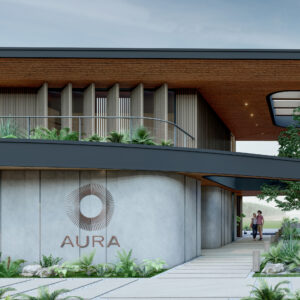
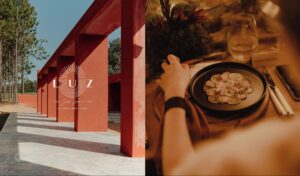
On the branding front, projects in José Ignacio exalt their personality and authenticity. Styles merge, concepts are inspired by the vision and influence of their creators, and all traits are codified to emphasize the uniqueness of niche strategies. In the images, LUZ Culinary Wine Lodge, with architecture by Diego Montero and Jian Farhadi, and branding by us at Estudio Nómade.
Punta Ballena and Laguna del Sauce
We allow ourselves to flip to the other side and now give you a tour of the western wing. Minutes from Punta del Este, Punta Ballena and its surroundings near Laguna del Sauce represent a zone characterized by intimacy and a lifestyle where local idiosyncrasy dominates.
In the area, you find local attractions like the Lussich Arboretum, one of Uruguay’s most extensive cultivated forests representing natural heritage reinforcing the area’s orientation toward those who prioritize the environment over the spectacle of services.
Minutes from this destination is Portezuelo and its natural magic, with the noted Chihuahua Beach, of special appeal to the swinger and LGTBIQ+ community.
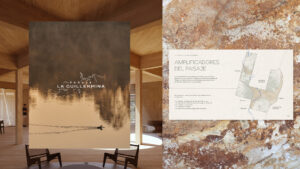
Parador Chicho, Chihuahua Beach, Portezuelo Bay. By Agustín Etchegoimberry.
With austere character, the coastal strip dominated by Portezuelo Bay holds projects laden with a folksy and relaxed mystique where nature embraces.
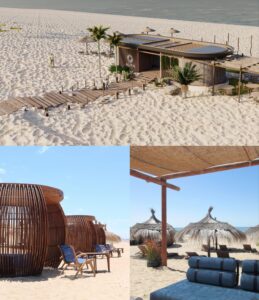
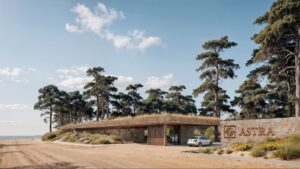
On the branding front, the western coastal corridor distributes projects sustained by an austere style, both in design and marketing/communication strategies. However, the area’s potential augurs new developments determined to interpret luxury by reading the environment. In the images: Astra Barrio Marítimo, Punta Ballena. By Guillermo Jacob and Athanasios Laskaridis.
Pueblo Edén
Local and foreign entrepreneurs often tell us they “can’t believe” the way many tourists, captivated by the majesty of the sea, omit from their itinerary on each visit the richness and depth of the Punta del Este hills, just 40 km north of Punta del Este.
However, the area has successfully built and exalted a positioning that serves as a complement—and counterpoint—to the coastal corridor. Slow Town, as Pueblo Edén is typically promoted internationally, offers Real Estate and Hospitality Services proposals inspired by a natural environment of hills, valleys, and rural landscapes that ensure an atmosphere of tranquility and disconnection.
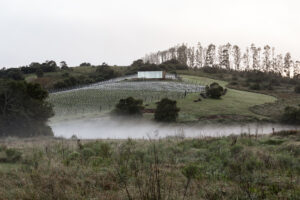
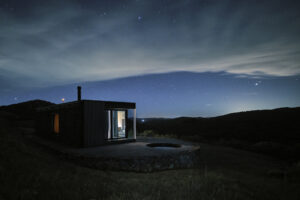
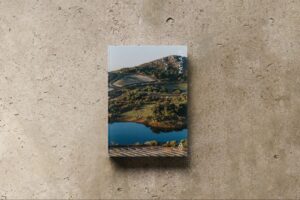
En las imágenes, Sacromonte, Sierra de Carapé. Arquitectura por MAPA, paisajismo por Roberto Mulieri y activación de marca de nuestra mano en Estudio Nómade.
The calm and enjoyment of indigenous flavors and landscapes position Pueblo Edén as an ideal destination for those seeking disconnection and adventure, with wine tourism being one of the destination’s highlighted activities. Pueblo Edén attracts people with a sybaritic profile and is one of the ultimate exponents of luxury without makeup.
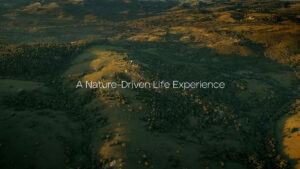
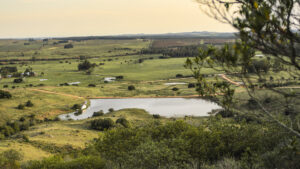
Orientados a visitantes que buscan paz, desconexión y disfrute del buen comer y beber, el branding de proyectos en Pueblo Edén orbita entre identidades de fuerte anclaje costumbrista que rinden tributo al lifestyle rural, con otras de perfil atemporal y minimalista que reflejan la descompresión, el silencio y la paz que Pueblo Edén asegura. En las fotos: <a href=”https://www.lastaperas.club/”>Las Taperas</a>, Pueblo Edén. Arquitectura por <a href=”https://www.instagram.com/pablozuninarq/”>Pablo Zunin</a>.
With an identity heritage that establishes Punta del Este as a landmark city in South America, Maldonado has succeeded in becoming a factory of concepts, premises, and possibilities for visitors, inhabitants, entrepreneurs, and developers from around the world.
How we do it at Estudio Nómade
At the studio, we have spent nearly 20 years developing branding projects for the Real Estate and Hospitality Services sectors in Punta del Este and Maldonado department. Our contribution consists of accompanying entrepreneurs to characterize and translate the value of their developments.
At Estudio Nómade, we not only know; we also live and witness the symbolic capital that Punta del Este and Maldonado department represent for the country and region, a value built over time with total alignment that has consecrated this geography as a strategic platform for business development.
Thus, our way of working on projects in eastern Uruguay consists of:
- Complement our accumulated knowledge and track record of Punta del Este branding projects with an alert attitude toward a constantly moving market;
- Recognize that Punta del Este and surrounding areas do not have a single identity, interpreting nuances and moving away from clichés to promote singularity in each project;
- Capture the symbolic capital of each destination to inspire messages, colors, images, and forms as flexible and varied, developing brands that coexist with the environment rather than invading it.