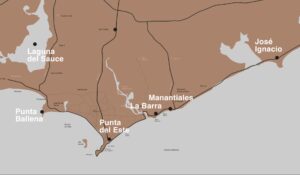
Relevant trend consultancies such as Zorraquino, WGSN and Kantar, among others, have been recognizing global behavioral drivers that allow us to speak of a type of consumer that we at Estudio Nómade have also identified in recent years while taking on projects for businesses across various industries: this is “the hopeful consumer”.
Let us offer an interpretation adapted to consumer behavior in this region of Latin America, while also recognizing how business owners and entrepreneurs are reading traits associated with this consumer — in order to deliver offers designed to connect with their aspirations and desires.
Traits of the hopeful consumer
According to WGSN, the hopeful consumer is a type that brings together behavioral patterns that have been consolidating since 2021, in the wake of the pandemic. It corresponds to a behavioral disposition in which people set their aspirations on enjoying a quiet life, stepping away from certain “social mandates”, and rediscovering the value of small things.
“The hopeful consumer renounces corporate optimization and redefines what success, happiness and community mean on a more personal and sustainable scale” (1).
As such, the hopeful consumer:
- Prioritizes care — both of themselves and of those close to them;
- Aligns with a new conception of beauty, centered on nurturing the body rather than physical appearance;
- Has no reservations about relocating — even across borders — in search of replacing urban lifestyles with suburban and rural settings;
- Is “eco-active”: conscious in their purchasing and consumption decisions, practicing sustainable habits and expecting visible, meaningful commitment from companies and brands;
- Values third places — those outside the usual social environments of home, work and school — viewing community and connection with others as essential elements of their happiness and wellbeing;
- Finds joy in life’s small moments, in gradual yet meaningful changes and milestones.
Tourism and migration: Uruguay as a destination for slow living
In 2025, Corporación América Airports, through Aeropuertos Uruguay — the brand responsible for managing the country’s National Airport Network — recorded 2,144,071 passenger movements, a volume 1.29% higher than the previous year.
Uruguay is increasingly being recognized by specialized media and international organizations as a distinctive destination for specialty tourism: the World Tourism Organization — UNWTO / UN Tourism — highlights its appeal as a travel destination and its potential as a hub for exclusive experiences.
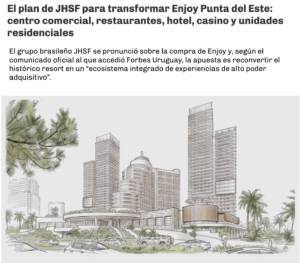
The prestigious luxury firm Fasano, part of the JHSF group, already has developments in eastern Uruguay. In 2026, it announced the acquisition of the Enjoy hotel and casino, to drive a mixed-use development under the “Fasano Península” brand, with an estimated investment of USD 500M.
While specialized media position it as an ideal destination for luxury tourism, the UNWTO highlights the growth of “green investments“, underscoring the country’s initiatives and policies around environmental protection, climate change and renewable energy — which, within the realm of travel & hospitality services, translate into new business opportunities tied to ecotourism.
Low population density, exceptional rural and coastal landscapes suited for disconnecting from the relentless pace of busy cities, and the rise of luxury offerings in landmark destinations such as Punta del Este, Pueblo Edén and José Ignacio — combined with economic, political and social stability — are all factors that make Uruguay a compelling draw not only for those looking to vacation, but also for those seeking to “live lighter” by choosing the country as a permanent place of residence.
As early as 2023, the National Statistics Institute reported that +100k foreigners had chosen Uruguay as their country of permanent residence, with Argentinians topping the ranking, followed by Venezuelans, Cubans, Brazilians, Spaniards and Americans. The deliberate growth of the real estate industry has been remarkable in these sought-after destinations — where Punta del Este once again stands out when it comes to developments that marry luxury with sustainability.
While we are far from generalizing — as our reflections stem strictly from experience working with specialty business owners and from non-representative data — we find it worthwhile to share the traits we have identified in the hopeful consumer within the local landscape. Let us take a closer look.
Rural living, yes. Sacrificing comfort, no.
The psychographic traits of hopeful consumers who come to Uruguay to vacation or settle permanently correspond to individuals who, beyond seeking a life connected with nature and a slower pace, expect high standards of quality and comfort from the offerings available to them.
We observe this not only in real estate developments, but across other areas tied to everyday life — such as private health insurance, educational institutions, and spaces for leisure and enjoyment, including clubs and specialty restaurants.
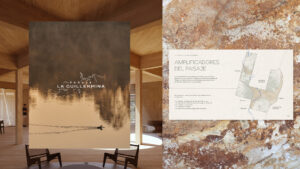
“Paraje La Guillermina” is a project in Pueblo Edén inspired by “The Sea Ranch” — an iconic Californian residential development that has served as a reference for generations of architects since 1960 — offering an intimate and private neighborhood for a small community of residents who live alongside and steward the natural richness surrounding a creek. MAPA led the architectural concept; at Estudio Nómade, we were responsible for the branding strategy and positioning for the project.

Day visits and short stays: the escape from demanding routines.
It goes without saying that not all “hopeful consumers” choose — or have the means — to uproot their entire lives to live in Uruguay. Yet hospitality services and the destinations they gravitate toward are perfectly suited to those who value life and reward themselves with exceptional moments of rest and restoration.
In recent times, rural areas and small towns connected to major cities like Buenos Aires and Montevideo have become popular choices for day visits; such is the case of Colonia del Sacramento and Carmelo in the department of Colonia, Uruguay.
Punta del Este continues to be chosen by many international visitors as a summer retreat — and increasingly as a permanent residence, even for internal migrants, meaning Uruguayans relocating from other departments. In terms of extended stays, Punta del Este is no longer just preparing for summer: services are increasingly stretching across the year, moving beyond a purely seasonal model.
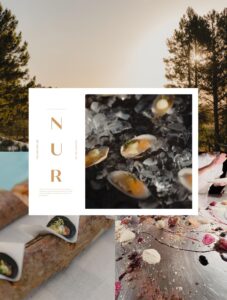
“Nur José Ignacio” is a gastronomic concept that brings together culinary delights and deeply sensory settings within the Luz Culinary Wine Lodge. Creating a space for intimate, sensorially rich moments is one of the defining reasons Nur exists. At Estudio Nómade, we developed the brand strategy and identity for Nur, as well as the preceding branding work for Luz Culinary Wine Lodge — a landmark development in José Ignacio offering a high-end, nature-driven, sustainable experience.
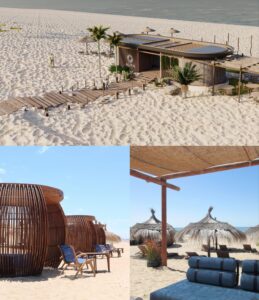
In a world where brands understand the power of onsite presence, Aura Punta del Este has its own café at parada 22 on the Brava: more than a café, it is a Beach Club that stands as a third place for gathering with others while taking in the raw energy of the sea. At Estudio Nómade, we led the 360 branding development for Aura Punta del Este — a project we have continued to evolve through new engagements that have allowed the brand to grow and activate over time in line with the business’s needs.
Sustainability, yes. Specialty, too.
For the hopeful consumer, a defining characteristic in the department of Maldonado is that sustainable businesses — particularly those related to hospitality services and ecotourism — tend to command a high average spend, as they predominantly offer personalized, intimate, and premium experiences — spanning high-end, premium, and super-premium tiers.
Generous investment in infrastructure, carefully curated facilities, the use of organic local ingredients, and the implementation of protocols and guidelines that prevent damage to natural settings through thoughtfully designed, generally small-scale programs are consistent hallmarks of the major developments we have had the privilege of working on.
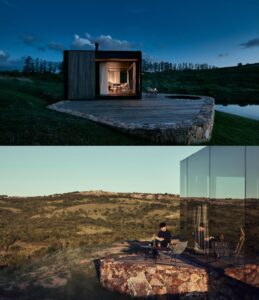
Sacromonte is an emblematic Uruguayan brand of the 21st century: young as it may be, it has managed to set the standard for wine tourism in the country — offering not only its restaurant, vineyards and accommodation in Sierra de Carapé (Maldonado), but also a winery and restaurant in Montevideo through its Sacromonte Jacksonville concept, where it celebrates the history of Uruguayan wine and welcomes local and international visitors to engage their senses and be delighted. At Estudio Nómade, we led the brand strategy development for both projects, encompassing brand strategy, digital design and packaging development.
Slow living translates into restraint in design and architecture.
As many will know — particularly those with a background in architecture, design and other projective disciplines — “form” is often inspired by cultural and ethnographic contexts and, in some cases, guided by macro consumer trends.
The era of restraint in design and architecture seems to move in step with the life the hopeful consumer aspires to: silence over noise, respect for the built landscape toward the natural one, sufficiency over ostentation — among other qualities that, across styles ranging from minimalism to brutalism, seek to create a quiet, understated tenor — both in the projection of living spaces and in the visual language used to communicate them.
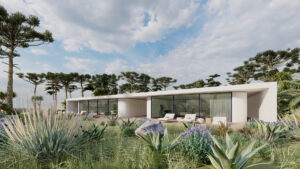
The architecture studio Obra Prima has been behind landmark developments on the Punta del Este scene. Above, La Carolina del Mar — a residential complex set between the Laguna Blanca, the forest and the sea in Manantiales — for which Estudio Nómade had the opportunity to develop the full branding concept.
As we can see, certain traits of the hopeful consumer are being captured by local business owners and entrepreneurs and translated into offerings that fuse calm, enjoyment and exclusivity.
Let’s work together on your project
If you are looking for a studio to help you build a branding proposition that goes beyond the look and fully activates the hopeful consumer’s desires, connecting with us might be a great move. Shall we?
Reach out at info@nomadeweb.com. Prefer something more personal? Let’s set up a meeting (:
- WGSN, “Future Consumer 2026”, 2025.